

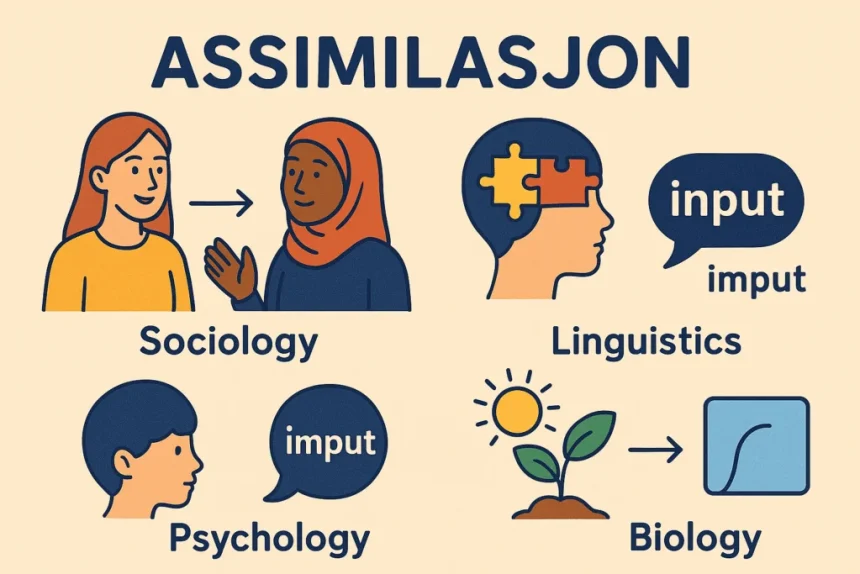
In every society, people from diverse backgrounds come together, bringing with them unique cultures, traditions, and values. Over time, these differences often blend into a shared identity through a process known as assimilasjon. While assimilation can promote unity and belonging, it also raises important questions about identity, cultural preservation, and inclusivity in today’s interconnected world.
What is Assimilasjon?
Assimilasjon, or assimilation, is the social process through which individuals or groups from one culture gradually adopt the practices, language, and norms of another. In most cases, it occurs when minority groups integrate into a dominant culture. The result can be a blending of traditions, but sometimes it also leads to the fading of original cultural identities.
The Positive Role of Assimilation
When approached inclusively, assimilasjon can bring several benefits:
-
Social Unity – Shared language and customs can reduce misunderstandings and foster a stronger sense of belonging.
-
Opportunities for Growth – Assimilation often provides access to education, careers, and social mobility within the dominant culture.
-
Cultural Exchange – Though assimilation emphasizes integration, it can also encourage the blending of traditions, creating new cultural expressions.
Challenges of Assimilasjon
While assimilation has benefits, it also presents challenges that societies must address:
-
Loss of Identity – Minority groups may feel pressure to abandon their heritage, leading to cultural erosion.
-
Exclusion and Inequality – Assimilation can sometimes prioritize one culture over another, reinforcing social hierarchies.
-
Generational Gaps – Younger generations may assimilate more quickly, creating tension with older members who wish to preserve traditions.
Assimilation in Modern Society
In today’s globalized world, migration and cross-cultural interactions are more common than ever. Assimilasjon plays a significant role in shaping modern nations by:
-
Encouraging multicultural identities that balance heritage with shared values.
-
Promoting integration policies that help newcomers adapt while respecting their traditions.
-
Highlighting the importance of inclusivity so that assimilation does not come at the cost of diversity.
Balancing Assimilation and Cultural Preservation
The key to healthy assimilation lies in balance. Societies thrive when they encourage newcomers to integrate while also respecting and celebrating their cultural roots. This balance ensures that assimilation fosters unity without erasing diversity.
Final Thoughts
Assimilasjon is a complex but powerful force in shaping societies. It can create unity, opportunity, and shared identity, but it must be approached with sensitivity to avoid the loss of cultural richness. In modern society, true progress lies not in replacing one culture with another but in blending and respecting the diversity that makes communities stronger.